

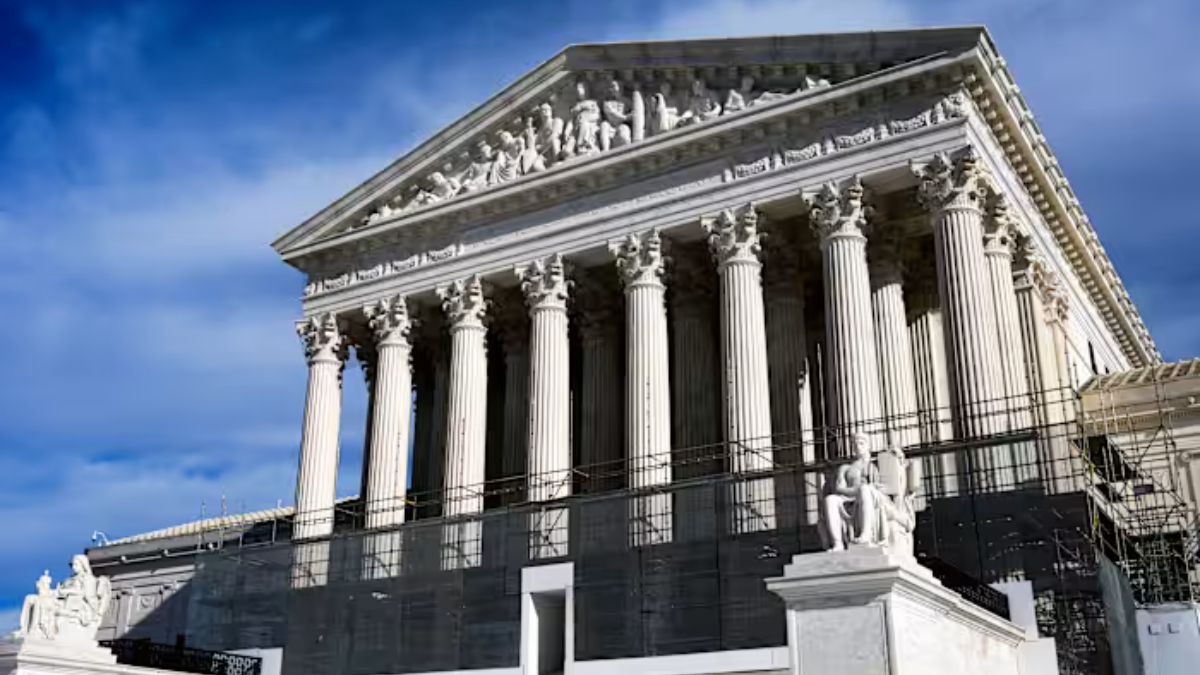
The Supreme Court on Monday night allowed New York to move forward with the 2026 elections using the state’s existing congressional map, temporarily blocking a trial court order that would have required a new map to better represent Black and Latino voters.
The decision drew a sharp dissent from the court’s three Democratic appointees, highlighting a contentious debate over race, election law, and federal intervention in state redistricting.
Background: The Challenge to New York’s 11th Congressional District

The controversy began with the boundaries of New York’s 11th Congressional District, which covers Staten Island and parts of southern Brooklyn.
A group of voters argued that the existing map diluted the voting power of Black and Latino residents, who make up roughly 30% of Staten Island’s population.
In late January, Justice Jeffrey Pearlman of the New York Supreme Court ruled in favor of the challengers. His order required the Independent Redistricting Commission to propose a new congressional map by February 6, effectively barring the state from using the current boundaries in upcoming elections.
Supreme Court Intervention
Rep. Nicole Malliotakis, New York’s only Republican member of Congress, along with state election officials and voters, requested the Supreme Court to block Pearlman’s order after lower state appeals courts declined to do so.
In a brief, unsigned order, the Supreme Court granted the request, effectively pausing the redistricting process. Justice Samuel Alito, who wrote a separate opinion supporting the decision, described Pearlman’s order as “unadorned racial discrimination.”
Alito argued that the trial court had instructed the Commission to redraw the district specifically to favor minority voters, which he called a violation of federal law.

He also noted that intervening now would prevent confusion close to the election and protect the Supreme Court’s ability to review the case before ballots are finalized.
The Dissent: Concerns About Federal Overreach
Justice Sonia Sotomayor, joined by Justices Elena Kagan and Ketanji Brown Jackson, strongly opposed the decision.
She criticized the majority for issuing a 101-word order that “takes the unprecedented step” of intervening in state election litigation without allowing New York’s highest courts to act.
Sotomayor emphasized that federal courts traditionally avoid meddling in state election law, especially so close to an election.
She dismissed claims of imminent “chaos” if the redistricting order were allowed to proceed, noting that the primary election is still four months away, leaving ample time for state courts to resolve the dispute.
She further warned that the Supreme Court’s action could set a dangerous precedent, encouraging parties to bypass state courts and seek emergency intervention from the high court directly.
What This Means for the 2026 Elections
With the Supreme Court’s pause, New York will use the existing congressional map for both primary and general elections unless further rulings change the outcome.
The ruling highlights the ongoing tension between federal authority and state control over redistricting, and the broader national debate over representation and race in electoral maps.
Key Takeaways
- The Supreme Court temporarily blocked a New York trial court order to redraw the 11th Congressional District map.
- Justice Alito supported the pause, citing concerns of racial discrimination and election disruption.
- Justice Sotomayor dissented, warning of federal overreach and undermining state election authority.
- The case underscores the challenges of balancing minority representation with constitutional protections in redistricting.
FAQs
Why did the Supreme Court intervene?
The Court paused the redistricting order to prevent potential confusion before the 2026 elections and to preserve its ability to review the case.
What did the trial court order require?
Justice Pearlman ordered New York’s Independent Redistricting Commission to redraw the 11th District map to enhance representation for Black and Latino voters.
Who dissented and why?
Justices Sotomayor, Kagan, and Brown Jackson dissented, arguing that the Court overstepped by intervening in state election law without allowing New York courts to act.
Will the map be changed before the 2026 elections?
For now, the state will use the existing map. Any changes depend on future rulings or appeals.