

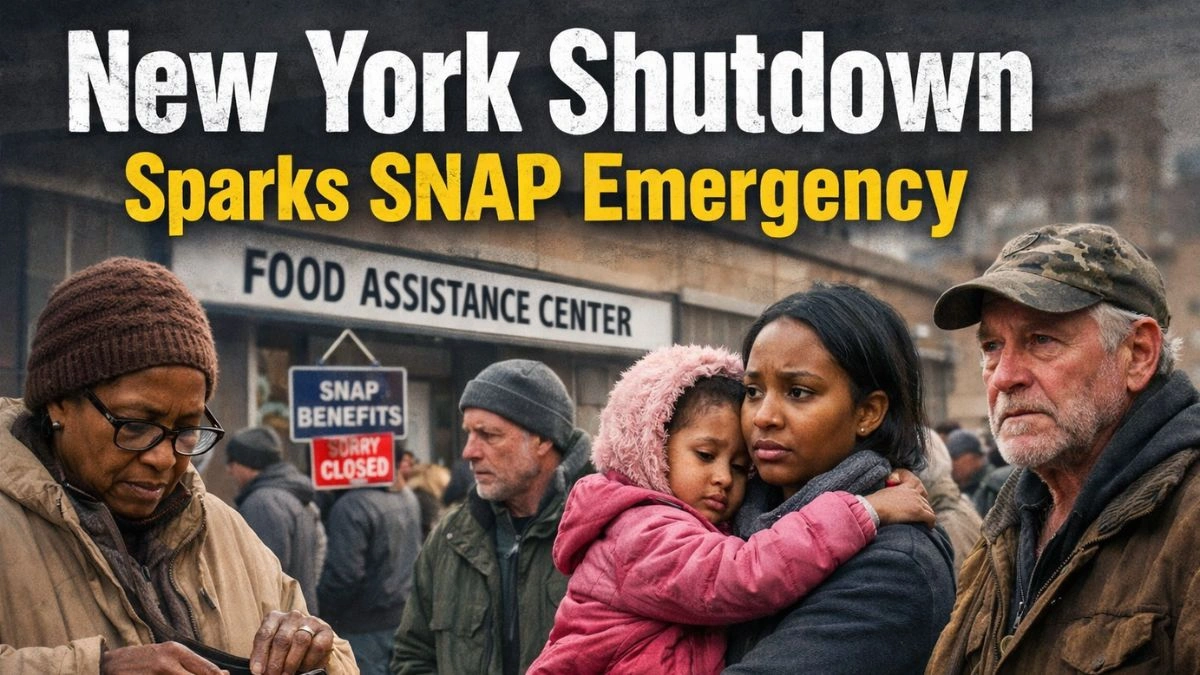
As the federal government shutdown threatens critical food assistance programs, several states have stepped in to safeguard vulnerable residents. With Supplemental Nutrition Assistance Program (SNAP) benefits for nearly 42 million Americans at risk, governors across the country are taking emergency measures to ensure continued access to food support.
New York Declares State Of Emergency To Support Food Banks
New York Governor Kathy Hochul declared a state of emergency on Thursday to unlock $65 million in funding for food banks and pantries statewide. The decision comes as federal funding for SNAP is scheduled to lapse on 1 November, leaving millions uncertain about their access to food assistance.

According to data from the US Department of Agriculture (USDA), New York receives nearly $650 million per month in federal SNAP funding. However, with neither Congress nor the Trump administration allocating funds for November benefits—estimated at $8 billion per month nationwide—states are facing mounting pressure.
Governor Hochul emphasized that food banks and community pantries are already overwhelmed. The emergency funds aim to reinforce these institutions as demand rises amid economic uncertainty.
Other States Mobilize Emergency Resources
New York is not alone in responding to the crisis. Several states have enacted emergency measures to prevent disruptions in food support:
Virginia’s Response

Virginia Governor Glenn Youngkin announced that the state would utilize surplus funds to cover up to one month of SNAP benefits. His move aims to temporarily stabilize food access for residents dependent on federal assistance.
Oregon’s Food Security Emergency
Oregon Governor Tina Kotek declared a 60-day food security emergency and pledged $5 million to food banks. The initiative is designed to mitigate the immediate impact of funding gaps while federal negotiations remain stalled.
Louisiana, New Mexico, And Vermont Step In
Louisiana, New Mexico, and Vermont also confirmed they would provide assistance to low-income households reliant on food stamps. These measures reflect growing concern about the public health implications of interrupted SNAP funding.
SNAP Benefits At Risk For Millions

SNAP serves approximately 41–42 million Americans, providing essential monthly food support. With benefits costing roughly $8 billion per month, the absence of congressional action has left states scrambling.
Most states, including New York, have indicated that fully replacing federal SNAP payments independently is financially unsustainable. However, advocacy groups such as the Legal Aid Society argue that New York has the financial capacity to temporarily fund the program and should leverage state resources accordingly.
Political Tensions Escalate
The shutdown has intensified political debate at both state and federal levels.
Governor Hochul criticized federal leadership, stating that cutting food assistance for approximately three million New Yorkers could trigger a significant public health crisis and negatively affect local grocers, bodegas, and farmers.
Meanwhile, 21 Democratic governors sent a formal letter to former President Donald Trump, urging the USDA to activate contingency funds to cover November SNAP benefits. The letter described SNAP as “more than a food assistance program—it is a lifeline.”
In addition, a coalition of more than two dozen Democratic states filed a lawsuit seeking to compel the administration to release contingency funds. The case was presented before a federal judge in Boston, signaling a potential legal battle over food assistance funding.
Food Banks Under Increasing Strain
Community food banks and pantries are bearing the brunt of the uncertainty. As federal funding delays continue, these organizations face surging demand while managing limited resources. Emergency state allocations are intended to stabilize operations and prevent severe food insecurity among low-income households.
Conclusion
The federal government shutdown has created widespread uncertainty for millions of Americans who depend on SNAP benefits for daily sustenance. In response, states such as New York, Oregon, and Virginia have declared emergencies and mobilized funds to support food banks and low-income households.
With billions of dollars in monthly assistance hanging in the balance, the situation underscores the essential role of SNAP in preventing food insecurity.
As legal challenges and political negotiations unfold, the coming weeks will determine whether federal contingency funds are released—or whether states must continue bearing the financial burden.
FAQs
Why did New York declare a state of emergency?
New York declared a state of emergency to release $65 million to food banks due to the potential lapse in federal SNAP funding.
How many Americans are affected by SNAP funding uncertainty?
Approximately 41–42 million Americans rely on SNAP benefits, which are now at risk due to the federal shutdown.
Can states fully replace federal SNAP funding?
Most states have stated they cannot afford to independently fund SNAP at the federal level of approximately $8 billion per month.